
In the soft glow of a crisp fall Friday morning in mid-Missouri, Matt Moore sits in a familiar place, the terminal of Columbia Regional Airport. The retired Shelter Insurance chief executive officer waits patiently to board the first departing flight of the day. His morning begins in Columbia, but by noon, he’ll be at the Southeastern Conference (SEC) headquarters in Birmingham, Alabama.
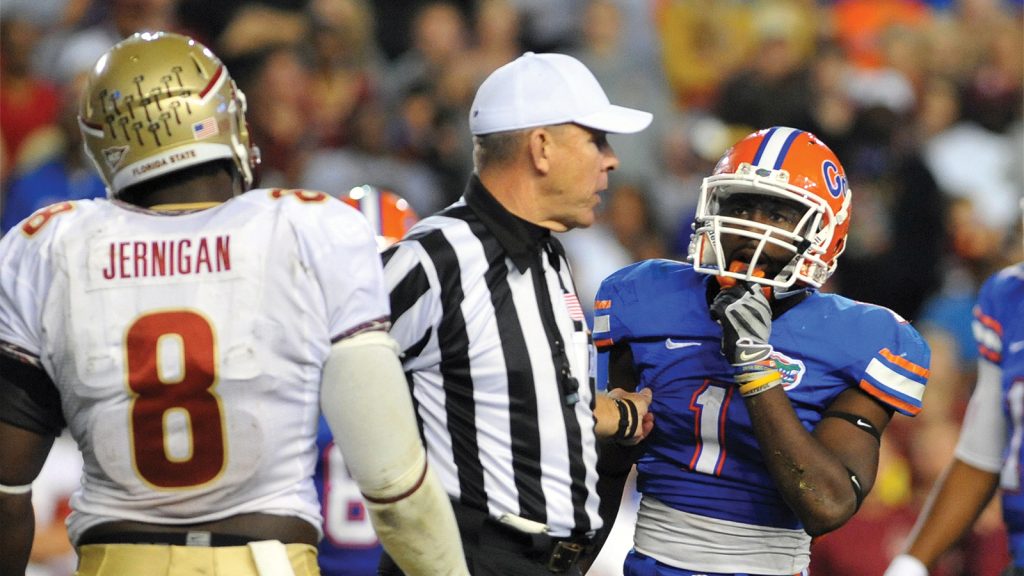
There, Moore plays a critical role in several SEC football games that weekend. As a member of the SEC Officiating Organization, his assignment is that of a collaborative replay official. He is one of the decision-makers who determine whether a call on the field is upheld or overturned during an official review.
It’s an unlikely journey for someone who grew up in a fatherless home in Little Rock, Arkansas. That journey took him from modest beginnings to the helm of one of the nation’s most respected insurance companies and, ultimately, to a role in college football officiating.
The Club Kid
Moore was in fifth grade when his parents separated, leaving his mother to raise him on her own. “My mom raised me, and I had a good childhood,” he recalled. “But for the most part, my father wasn’t involved.”
Before his father left, he purchased Moore a membership to the local Boys Club. The club became a refuge, a place where kids like Moore could play sports, build friendships, and find belonging. That introduction would shape his future.
“I was a Club kid,” Moore said. “It was where I found my voice. We played everything we could. It gave us purpose and a sense of family.”
The Boys Club filled the void left by his absent father. Sports became both his escape and his passion. Baseball, in particular, would become the sport that opened doors. Moore’s American Legion Baseball coach, Earl McCurdy, recognized his potential early on.
“Matt, I believe you have the talent to play at the college level,” McCurdy told him. Standing six-foot-two and throwing left-handed, Moore had the kind of skill that couldn’t be taught.
“You never know when someone will help change your life,” Moore said. “Coach McCurdy saw something in me that I didn’t see in myself. I ended up playing college baseball because of him.”
That opportunity altered the course of his life. Moore went on to play four years at the University of Arkansas–Little Rock, building relationships that would quietly influence his future career path.
The Unofficial Official
Like many college athletes, Moore picked up officiating to stay connected to sports and earn a little extra money. During those years, he officiated local basketball and football games. It was a side gig that would later evolve into something far more meaningful.
His connection to the local Boys Club remained strong. After graduation, he returned there as the athletic director, unknowingly continuing a thread that would tie together much of his success.
In 1979, Moore entered graduate school at Northeast Louisiana University, serving as a graduate assistant baseball coach. It was also where he met Rhonda, the woman who would become his wife of 44 years. He was pursuing a master’s degree while she studied occupational therapy.
After graduation, the couple moved to southern Louisiana for Rhonda’s clinical training, first in Baton Rouge, then New Orleans. For Matt, that move brought another unexpected opportunity.
“I got a coaching job in a little town called Reserve, Louisiana,” he said with a grin. “I was the head baseball coach, head basketball coach, assistant football coach, bus driver, groundskeeper, and I washed the uniforms.”
By 1983, Matt and Rhonda were ready to return to Little Rock, where he began exploring new career options. While working for a sporting goods company, fate intervened once again.
“A man named Carl Owen had an opening on his high school football officiating crew,” Moore recalled. “He asked me to join, and I did. A few weeks later, he told me about another opening, this time as a claims adjuster for Shelter Insurance.”
Owen, a branch claims supervisor for Shelter, became a key mentor. Soon, Moore was balancing two careers, one in insurance and another in officiating.
“I always wanted to work major college football games,” Moore said. “Starting my career at Shelter gave me the flexibility and support to pursue that dream.”
Over time, Moore moved from high school to collegiate officiating, working games in the former Arkansas Intercollegiate Conference, the Gulf South Conference, and Big West Conference. His reputation for diligence and fairness grew, earning him the respect of peers and conference officials alike.
Insured for Life
Those who know Matt Moore describe his career rise as inevitable. He was too focused, too thoughtful, and too disciplined not to succeed. Each promotion at Shelter signaled that leadership had bigger plans for him.
Meanwhile, his officiating career was also on an upward climb. As Moore’s network expanded, John Gaston, an official who was moving from the Southwest Conference to the SEC, played a major role in Moore taking the next step.
“He got my foot in the door at the SEC,” Moore explained. “He had a voice, and Bobby Gaston listened to him.”
Bobby Gaston, who was responsible for hiring SEC officials, invited Moore in 1994 to serve as an alternate official. He accepted and spent the next five years on the conference’s supplemental list. In 1999, Moore was upgraded to a full-time SEC official.
Moore’s Move to Missouri
In 2000, at age 44, Moore was promoted to regional claims director and transferred to Shelter Insurance’s corporate headquarters in Columbia. Moore was allowed to continue officiating even while serving in an executive role, a testament to the company’s trust in him and his ability to balance both worlds. But that dual commitment wasn’t without challenges.
“The only thing I made clear,” Moore said, “was that I couldn’t officiate a game involving the University of Missouri.”
At the time, Mizzou was still a member of the Big 12 Conference, but occasional non-conference matchups could create potential conflicts. That concern grew more complicated in 2012 when Missouri and Texas A&M left the Big 12 to join the SEC, a change that brought Moore’s professional and officiating paths even closer together.
Most people would never have realized the potential conflict, but his Columbia neighbors certainly took notice.
Drew Smith, now community bank president at First State Community Bank, remembered the moment vividly. One Saturday afternoon, while watching an SEC football game, his wife, Tory, called out from the living room: “That guy is our neighbor!”
“What do you mean?” Drew asked.
She pointed to the television, where an official in a white hat was explaining a penalty to the crowd. “That’s the same man I saw mowing his lawn this summer,” she said.
Sure enough, the man on the screen was their neighbor, Matt Moore.
“I’ll never forget it,” Drew recalled with a grin. “He said, ‘Holdin’ on the offense!’ with that Arkansas drawl, dropping the ‘g.’ I just laughed.”
When Moore returned home after the season, the two quickly struck up a friendship. Both shared a love of sports and golf, and before long, Drew found himself learning from his new neighbor. After a lifetime of seeking guidance from mentors, Moore had become one himself.
A Full-Circle Journey
Moore’s relocation to mid-Missouri wasn’t just a professional milestone. It became a blessing for the Columbia community. His arrival brought renewed energy, resources, and leadership to the Boys & Girls Club of Columbia, an organization much like the one that had shaped his own youth in Little Rock.
His impact began with a donation and a heartfelt letter describing his past as a proud “Club kid.” He made it clear he wanted to give back.
“When I came to Columbia, I took a look at the current facility, and it was awful,” Moore recalled. “I had something to compare it to, and it was so small compared to the clubs I was involved with in Arkansas.”
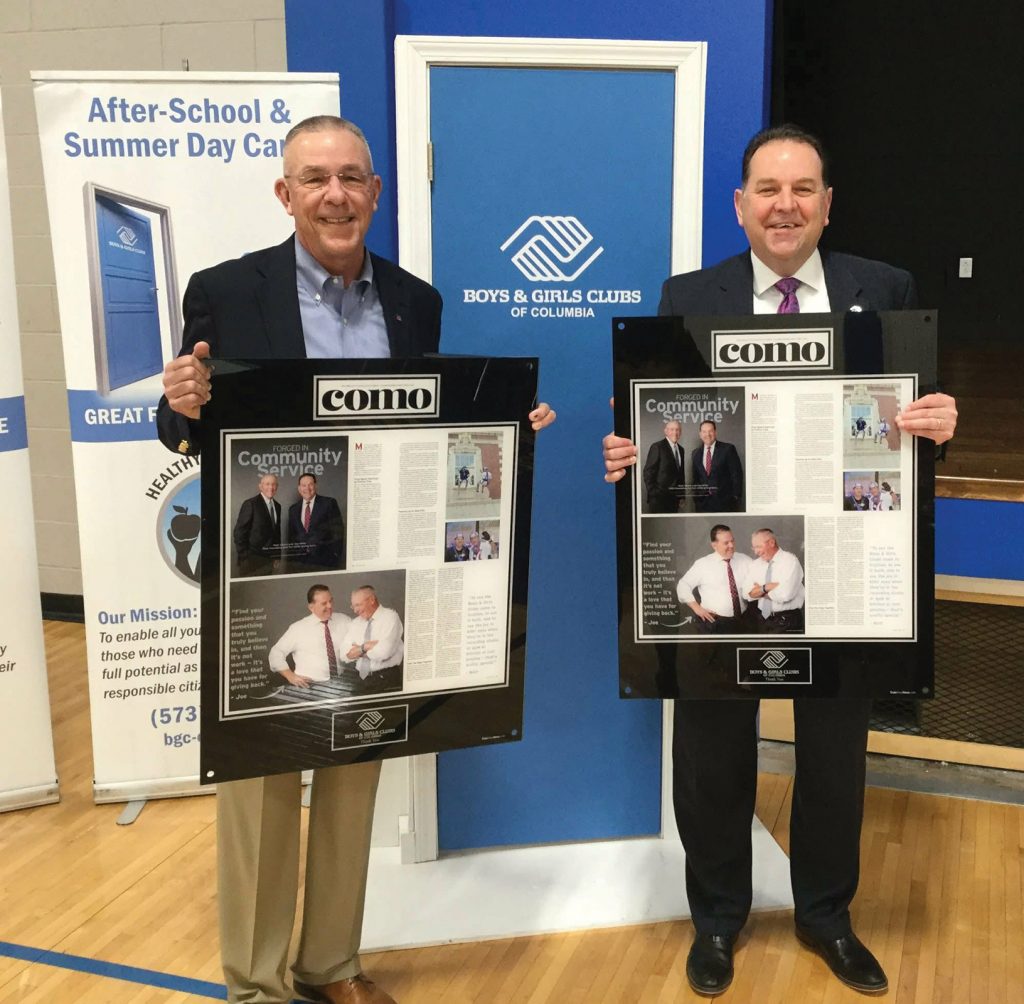
Determined to make a difference, Moore teamed up with fellow civic leader and close friend Joe Miller. Together, they set out to revitalize the local chapter. Soon after, they brought Drew Smith into the leadership team to help drive the effort forward. Founded in 1997, Columbia’s Boys & Girls Club was still relatively small, but by 2017, thanks to a community-wide campaign, it had doubled in size.
The expansion ushered in a new era of engagement. The upgraded facility featured a gymnasium, culinary kitchen, music recording studio, and teen center, spaces designed to inspire and empower.
“We owe it to each other to help,” Moore said. “Sometimes it’s just a word of encouragement. I like to think of it as giving a hand up, not a handout.”
Current Shelter Insurance President and CEO Rockne Corbin praised Moore’s generosity: “Matt has such a big heart with a unique and caring quality. He gives so much back to the community.”
For Moore, the project carried deep personal meaning. “Kids growing up without a dad have a special place in my heart,” he said, his eyes welling up. “When my father left, it was probably the most devastating thing I ever experienced.”
Smith, who witnessed the entire campaign, reflected on Moore’s leadership: “Matt’s leadership was on full display. We all worked together, but Matt and Joe, along with Executive Director Valorie Livingston, were charting the course. Matt’s determination, paired with his personal story, helped everyone understand why success mattered. His passion was inspirational.”
Moore’s move to Missouri allowed him not only to excel professionally at Shelter, but also to give back to an institution that once gave him direction. In many ways, life had come full circle, but his story was far from finished.
One Man, Two Teams
For years, Moore balanced two demanding worlds: corporate leadership and college football officiating. He served as both a side judge and referee in the SEC until 2014. His final game as a “white hat” referee during the regular season was a Georgia Tech–Georgia rivalry matchup in Athens. The growing demands of his full-time role made it clear it was time to hang up his whistle. His final officiating assignment came at the 2014 Russell Athletic Bowl, featuring Oklahoma versus Clemson.
Moore joined the Shelter board of directors on January 1, 2016, and became president and chief operating officer on January 1, 2018. He became CEO in the fall of 2019, reaching the pinnacle of his professional career.
“He had the perfect temperament to lead through incredibly challenging times,” Corbin said, referencing the COVID-19 pandemic. “He made sure every employee felt included. Matt led weekly company-wide calls, openly sharing, ‘Here’s what we know and what we don’t know.’ That transparency helped steady everyone during an uncertain period.”
“I know what it’s like to be part of a team, and to lead one,” Moore explained. “It’s all about communication. It’s no different from an officiating crew. We have to support one another, and if we do our job well, no one even notices we were there.”
When he assumed the CEO role, Moore made one very important phone call. “The first person I called was Earl McCurdy,” he said. “I just wanted him to know how much it meant to me that he believed in me.”
Although he had retired from on-field officiating, Moore stayed connected to the SEC, and upon his retirement from Shelter, he jumped back in as a collaborative replay official, a position he continues to hold.
“It’s called a part-time job,” Moore laughed, “but we work year-round to stay current on rule changes, watching video, and new technology. I’m constantly learning something new.”
Over the years, Moore has been part of many memorable moments, from officiating Texas A&M’s first SEC game to calling matchups featuring legendary coaches like Nick Saban, Steve Spurrier, and Lou Holtz. But his proudest achievement came in early 2025, when he was assigned to the collaborative replay crew for the College Football National Championship between Notre Dame and Ohio State.
“We were all so proud of him,” said Smith. “Everyone knew it was the highest honor. It was exciting and nerve-wracking at the same time.”
Ohio State went on to win the national title, and true to form, few people outside his immediate circle knew Moore had even been part of the game. That anonymity, he’d say, was the ultimate sign of a job well done.
Today, the 69-year-old Moore continues his legacy of leadership and service. He’s currently partnering with local leader Gary Thompson to develop a new $9 million United Community Builders Center in one of Columbia’s underserved neighborhoods.
Additionally, he serves on the executive board of the James and Annelle Whitt Entrepreneurial Development Foundation. Its mission is to empower minority and women-owned businesses to grow, thrive, and lead.
“I’ve been blessed to have great people around me,” Moore reflected. “I try to get along with everyone, and I just want to keep doing more.”
Moore is proud of his two kids — Matt Jr. and his wife, Megan, of Warrenton, Missouri, and Mallory Smith and her husband, Tom, of North Little Rock, Arkansas — along with five grandchildren. He and Rhonda love spending time with all of them.
“When I retired, we decided to stay put, as Columbia is home to us,” he said. “We have been here 25 years, and we are committed to doing our part to helping it thrive.”
From “Club kid” to corporate leader, from the baseball diamond to the SEC replay booth, Matt Moore’s story is one of perseverance, mentorship, and unwavering commitment to family, to work, to sports, and to helping others along the way.