
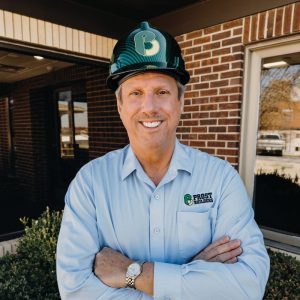


We’ve been building in Missouri since 1949, and I’ll be honest with you: most construction projects go over budget. Not just a little over. A 2025 industry analysis found that 85% of projects exceed their budgets by an average of 28%. McKinsey’s research on large projects shows they can run up to 80% over budget and finish 20% behind schedule. And according to a 2024 study of over 16,000 construction projects, only about 8 out of every 100 finish on time AND on budget. After 75 years and eight generations of building everything from schools to churches to the State Capitol, we’ve seen why this happens. And more importantly, we’ve learned how to avoid it. Here’s what goes wrong, and what we do differently.
The Problem With “Just Give Me Your Best Price”
I can’t tell you how many times we’ve seen this: a school board gets three bids. One is significantly lower than the others. They take the low bid. Six months later, they’re dealing with change orders, cost overruns, and schedule delays. What happened? Either the contractor missed things in the estimate, or they lowballed the price to win the job, knowing they’d make it up later with “extras. We track our actual costs on every project. When we give you a number, it’s based on what things really cost in Central Missouri, not what we hope they might cost. We know local soil conditions. We know what permits take in Jefferson City versus Columbia. We know which suppliers are reliable and which ones will leave you waiting. Does that mean we’re always the lowest bid? No. But we’re usually pretty close to our estimate when the project’s done.
When Materials Don’t Show Up
Here’s a story that shows how fast things can go sideways. We were building a new gymnasium for Jefferson Middle School in Columbia. An $11 million project. The plans called for steel bar joists for the roof structure. Then we got word: steel delivery was going to be delayed by months. The school needed this building ready for students. We didn’t have months to wait. We have our own concrete crews and registered professional engineers on staff. So, we ran the numbers and went back to the architect and school district with a proposal: switch to precast concrete double tees instead of steel bar joists. We redesigned that part of the building. We got it done three months AHEAD of schedule. And the school saved $300,000. That’s not something every contractor can do. If you’re just coordinating subcontractors, you wait for the steel. If you actually have your own construction professionals and crews who can pour concrete, you have options. We’re not a “suitcase” general contractor who comes to town with one superintendent and subcontracts everything. When you self-perform critical work like concrete and carpentry, you have more control when things go wrong. And in construction, things always go wrong somewhere.
Who’s Actually Building Your Building?
I’ve seen too many projects where the “general contractor” is really just a guy with a phone coordinating subs. Nothing against subcontractors — we use them too. But when that’s ALL the general contractor has, you’re at everyone else’s mercy. Your electrician is three weeks behind on another job? You wait. Your concrete supplier has a scheduling problem? You wait. Somebody makes a mistake? They blame each other, and you pay for it. Prost knows the subcontractors that supplement a late subcontractor’s crew. We’re an employee-owned company. The people running your job have actual skin in the game. Our construction professionals are all employee-owners. When something goes wrong, they fix it. They don’t point fingers and send you a change order. And we’re local. We’ve been in Jefferson City since 1949. We’re not going anywhere. Our reputation here matters more than any single project.


